How I Finally Found Real Flexibility—And Why It Changed Everything
For years, I thought being stiff was just part of aging—until I realized flexibility isn’t about how far you can stretch, but how well your body moves every day. Tight hips, sore back, limited motion—they’re not normal. Through small, consistent movement shifts, I regained fluidity in my body and confidence in my physical freedom. This is what actually works, no hype, just real progress. It didn’t happen overnight, and it didn’t require extreme poses or hours on a mat. Instead, it came from understanding what true flexibility really is, recognizing the habits that were holding me back, and applying practical, science-supported strategies that fit into real life. What I discovered reshaped not only how I move—but how I feel in my body every single day.
The Flexibility Lie We’ve All Believed
For decades, many of us have operated under the assumption that flexibility is something reserved for dancers, gymnasts, or young people with naturally loose joints. We’ve been told that if we weren’t flexible by our 20s, we’d never be. Or that stretching once a week after a workout is enough to keep our bodies limber. These beliefs are not only misleading—they’re limiting. The truth is, flexibility is not a luxury or a performance skill. It is a fundamental part of functional movement, joint health, and long-term physical independence. When we accept stiffness as inevitable, we unknowingly surrender mobility, comfort, and resilience.
One of the most persistent myths is that flexibility is purely about muscle length. While muscles do play a role, they are only one piece of a much larger system. Connective tissues like fascia, tendons, and ligaments also influence how freely we move. These tissues adapt slowly and respond best to consistent, gentle loading rather than aggressive stretching. Another misconception is that you can’t improve flexibility after age 30 or 40. Research in exercise science has repeatedly shown that adults of all ages can increase their range of motion with regular, appropriate movement. The nervous system, which governs how much stretch a muscle will tolerate, can be retrained at any stage of life.
Letting go of these myths was the first real shift in my journey. I stopped seeing flexibility as a test of how far I could reach and started viewing it as a measure of how well my body could function. I no longer compared myself to others or felt discouraged by what I couldn’t do. Instead, I focused on progress—small improvements in how I stood, bent, turned, and walked. This mental reset allowed me to approach movement with patience and curiosity, not frustration. And that change in mindset made all the difference.
Why Flexibility Isn’t Just About Touching Your Toes
The ability to touch your toes is often used as a benchmark for flexibility, but it’s a narrow measure of a much broader capability. True flexibility affects nearly every aspect of physical function. It supports better posture by allowing the spine and pelvis to align naturally. It reduces strain on joints by ensuring muscles and connective tissues aren’t pulling them out of position. It enhances breathing by allowing the ribcage and diaphragm to move freely. And it plays a crucial role in injury prevention—stiff muscles and restricted joints are more prone to strain, especially during everyday activities like lifting a grocery bag or turning to look behind you while driving.
There are two main types of flexibility: static and dynamic. Static flexibility refers to how far you can hold a stretch, like reaching forward in a seated position. Dynamic flexibility, on the other hand, is about how well your body can move through a full range of motion during activity—such as swinging your leg forward while walking or twisting your torso to pick something up from the floor. Both are important, but dynamic flexibility is often more relevant to daily life. A person might be able to touch their toes in a static stretch but still struggle to bend down comfortably because their nervous system doesn’t allow that range of motion during movement.
Improving my dynamic flexibility made a noticeable difference in chronic lower back tension. For years, I dealt with a dull ache after long periods of sitting or standing. I assumed it was due to weak core muscles, but the real issue was tight hip flexors and restricted movement in the thoracic spine. When I began incorporating targeted mobility exercises that improved the range of motion in these areas, the tension began to ease. Simple tasks like getting out of a car, tying shoes, or reaching for a high shelf became smoother and less effortful. I wasn’t just more flexible—I was more capable.
The Hidden Enemy: Sedentary Living
Modern life is built around sitting. We sit at work, sit during commutes, sit while eating, and sit while unwinding in the evening. On average, adults spend more than eight hours a day in a seated position. This prolonged inactivity has profound effects on the body’s mobility. When we sit for long periods, the hip flexors—muscles at the front of the hips—shorten and tighten. The hamstrings become stiff from being in a lengthened but inactive state. The glutes, which are essential for hip extension and stability, weaken from disuse. This creates a postural imbalance that pulls the pelvis forward, tilts the spine, and contributes to lower back pain.
Even if you exercise for 30 minutes a day, that single session doesn’t fully counteract the effects of hours spent seated. Movement during exercise is often repetitive—like walking on a treadmill or cycling—and doesn’t address the specific patterns of stiffness caused by sitting. I learned this the hard way. I considered myself active—I walked daily, did light strength training, and avoided a completely sedentary lifestyle. Yet, I still felt stiff, especially in the mornings. My body moved like it was decades older than it was. The realization hit me: my daily routine was dominated by static positions, and my brief workouts weren’t restoring balance.
The turning point came when I started paying attention to how I felt after sitting for long stretches. My hips felt locked, my shoulders rounded forward, and my neck stiff. I began to see sitting not as neutral, but as an active contributor to physical decline. This awareness led me to make small but meaningful changes. I started taking movement breaks every hour—standing up, rolling my shoulders, doing a few gentle lunges or side bends. I adjusted my workspace to allow for more upright posture and incorporated standing intervals throughout the day. These shifts didn’t eliminate sitting, but they disrupted its cumulative effect on my body.
What Actually Works: A Smarter Movement Routine
Once I understood the problem, I looked for solutions that went beyond traditional stretching. I discovered that effective flexibility work isn’t just about pulling muscles into a stretch—it’s about improving the body’s ability to move freely and efficiently. This involves mobility exercises that target not only muscles but also fascia, joints, and the nervous system. My routine evolved into a daily 10-minute practice that includes dynamic warm-ups, targeted lengthening, and active recovery movements. The key is consistency, not duration. Ten focused minutes every day yield far better results than an hour-long session once a week.
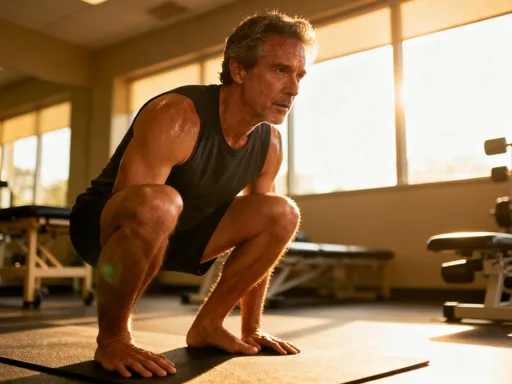
My morning routine starts with gentle dynamic movements: arm circles, cat-cow stretches, and leg swings. These wake up the nervous system and prepare the joints for movement. I then use a foam roller for myofascial release, focusing on tight areas like the upper back, hips, and calves. Foam rolling helps break up adhesions in the fascia—the connective tissue that surrounds muscles—and improves blood flow, making muscles more responsive to stretching. I follow this with assisted stretches using resistance bands. For example, I loop a band around my foot to gently pull my leg into a hamstring stretch, allowing me to go deeper without straining. Resistance bands also help with active stretching, where I engage opposing muscles to improve control and range of motion.
I’ve also incorporated bodyweight control exercises like slow squats, controlled lunges, and wall slides. These build strength within a full range of motion, which is essential for functional flexibility. Unlike passive stretching, where a muscle is lengthened without effort, active mobility work teaches the nervous system that it’s safe to move into new ranges. This reduces the protective tension that often limits flexibility. The tools I use are simple, affordable, and easy to store—a foam roller, a couple of resistance bands, and enough floor space to move. I don’t need a gym or special equipment. What matters is showing up every day, even when I don’t feel like it.
The Science Behind the Stretch: How Tissues Adapt
Flexibility improvements aren’t just about willpower or effort—they’re about how the body’s tissues respond to consistent stimulus. Muscles have elastic properties, meaning they can lengthen and return to their original state. But when they’re held in a shortened position for long periods, they adapt by losing some of that elasticity. Tendons, which connect muscles to bones, also have a degree of resilience, but they adapt more slowly. The nervous system plays a critical role too. It governs the stretch reflex—a protective mechanism that causes a muscle to contract when stretched too far or too quickly. This reflex prevents injury, but it can also limit flexibility if the nervous system perceives movement as unsafe.
Research shows that regular, low-intensity stretching over time can increase the nervous system’s tolerance to stretch, allowing for greater range of motion without triggering the protective reflex. This is why consistency beats intensity. A gentle stretch held for 30 seconds daily is more effective than an aggressive stretch once a week. The body responds to frequency, not force. Over time, the tissues remodel at a cellular level—collagen fibers in the fascia realign, muscle fibers add sarcomeres (the basic units of contraction) in series, and joints gain smoother articulation.
Breath and relaxation are also key. When we hold our breath or tense up during stretching, the nervous system interprets this as stress, which increases muscle tension. By focusing on slow, deep breathing, we activate the parasympathetic nervous system—the part responsible for rest and recovery. This creates a state of calm that allows muscles to release more fully. I’ve found that pairing each stretch with three to five deep breaths makes a noticeable difference in how far I can move. It’s not about pushing—it’s about inviting the body to open up.
Integrating Flexibility Into Real Life
The most effective flexibility routine is one that fits seamlessly into daily life. I don’t set aside a special time or expect perfection. Instead, I weave mobility into existing habits. I do a few neck rolls and shoulder shrugs after sitting at my desk. I perform a standing forward fold while waiting for the kettle to boil. I stretch my hips and hamstrings before getting into bed. These micro-movements add up. They don’t require extra time or willpower—they simply make movement a natural part of my day.
The real-world benefits have been profound. I can bend down to tie my shoes without holding onto something for support. I can lift a suitcase into an overhead bin without wincing. I can turn my head fully while reversing the car, which makes driving safer. These may seem like small things, but they contribute to a sense of physical confidence. I no longer approach movement with hesitation or fear of pain. I trust my body to move the way it’s meant to. And that trust has improved my quality of life in ways I didn’t expect.
You don’t need perfect form or a flawless routine. What matters is showing up consistently with intention. It’s not about achieving a certain pose or impressing anyone. It’s about making your body work better for you. The most sustainable changes are the ones that feel doable, not overwhelming. Start with one or two movements that address your tightest areas. Do them daily. Notice how your body responds. Over time, you’ll build a routine that feels natural and rewarding.
Beyond the Body: The Mental Shift
As my physical flexibility improved, I noticed a parallel shift in my mindset. I became more aware of how I held my body throughout the day. I noticed when I was slouching, holding my breath, or moving stiffly. This body awareness led to better choices—adjusting my posture, taking breaks, moving more intentionally. I also became less afraid of movement. For years, I avoided certain motions because I worried I’d hurt myself. Now, I approach physical activity with curiosity rather than caution. I explore my range of motion gently, without judgment.
This confidence extends beyond physical tasks. There’s a deep sense of empowerment that comes from knowing your body can move freely and safely. It affects how you carry yourself, how you interact with the world, and how you feel in your own skin. Flexibility, in this sense, becomes a form of self-respect. It’s a commitment to maintaining your independence, comfort, and vitality as you age. It’s not about looking a certain way or achieving a social media-worthy pose. It’s about feeling good in your body every day.
And that feeling pays dividends in energy, mood, and overall well-being. When your body moves well, you feel more alive. You’re less burdened by aches and limitations. You’re more likely to stay active, which supports heart health, metabolism, and mental clarity. Flexibility isn’t just a physical trait—it’s a foundation for a resilient, engaged life.
Flexibility isn’t a performance metric—it’s a foundation for a mobile, resilient life. It’s not about extremes, but about reclaiming natural movement. With simple, science-backed habits, anyone can improve at any age. This isn’t a quick fix; it’s a lifelong upgrade. Start small, stay consistent, and feel the difference in everything you do.