More than group buys: How seasonal shopping helped me bond with my kids
Remember those chaotic back-to-school mornings, scrambling for supplies while your child wonders why summer ended so fast? I’ve been there. But last year, something changed. We started using our neighborhood’s group buying app not just to save money, but to plan, choose, and even laugh together over snack lists and pencil cases. What felt like a chore became a ritual—one that brought us closer. This is how a simple tech tool reshaped our family rhythm with every season.
The Seasonal Rush That Used to Stress Us Out
There was a time when the end of summer felt less like a transition and more like a freight train heading straight for our front door. One day, the kids were barefoot on the lawn, chasing fireflies. The next, I was knee-deep in checklists, arguing with my son about why he couldn’t just use last year’s backpack (spoiler: it had a hole the size of a hamster). The holidays weren’t any easier—suddenly, we needed gift wrap, teacher thank-you cards, holiday cookies for the class party, and enough mittens to outfit a small army. The pressure built quietly but steadily, like a slow leak in a tire you keep ignoring until the ride gets bumpy.
What I didn’t realize then was that the stress wasn’t just about the shopping. It was about doing it alone. I’d make lists in the dark at 11 p.m., after the kids were in bed, trying to remember what the school supply list said about glue sticks (was it washable? Did it need to be glitter-free?). My kids were passive participants—receiving supplies, wearing new sweaters, eating packed lunches—but not part of the process. They didn’t understand why I was so tense, and I didn’t know how to include them without turning it into a circus. The emotional toll was real. I felt like a manager, not a mom. And they felt disconnected, like seasonal changes were something that happened to them, not with them.
Then one August evening, while scrolling through our neighborhood Facebook group, I saw a post that stopped me mid-scroll. “Back-to-school group buy—deadline Friday! 20% off JumboPencil packs, eco-lunch kits, and non-toxic markers. Free pickup at the community center.” Dozens of comments followed: “Adding 3 for my twins!” “Can we include reusable snack bags?” “Yes, and let’s get the blue ones—less pink glitter everywhere.” It wasn’t just a transaction. It felt alive. It felt communal. And for the first time, I saw that shopping didn’t have to be a solo sprint. It could be a shared step—one we could take together, as a family and as a community.
How Group Buying Became Our Family’s Planning Partner
I’ll admit, my first instinct was purely practical: Save money? Yes, please. But what surprised me was how quickly the group buy transformed from a budgeting hack into a family planning ritual. That first season, I invited my kids to help me go through the list. “You pick the color of your pencil case,” I said, pulling up the shared spreadsheet on my phone. My daughter gasped. “I get to choose? Even if it’s purple with unicorns?” “Even if it’s purple with unicorns,” I confirmed. My son, usually indifferent to stationery, suddenly cared deeply about which eraser was “least likely to smear.”
What started as a five-minute task turned into a thirty-minute conversation. We talked about why we needed certain things, what “eco-friendly” meant, and whether glitter glue was worth the mess. I didn’t realize it then, but I was teaching financial literacy, sustainability, and decision-making—all wrapped in a conversation about highlighters. The best part? My kids felt heard. They weren’t just getting supplies. They were part of the story behind them. And for me, the weight of planning lightened. I wasn’t making all the choices alone anymore. We were a team.
By autumn, we had expanded the idea. The same app that helped us with school supplies now had a fall harvest group buy: local apples, honey, and handmade granola for school snacks. We voted as a family on which flavors to order. My daughter insisted on cinnamon-apple. My son wanted chocolate chunk (I drew the line at that one—just once). When the boxes arrived, unpacking them felt like opening presents—not because of the items, but because we’d chosen them together. That’s when it hit me: this wasn’t just shopping. It was a quiet act of connection, disguised as logistics.
From Screen Time to Shared Time: Turning Apps into Connection Tools
I know what you’re thinking. “Another screen in front of my kids? Really?” I used to worry about that too. We’ve all read the articles: too much screen time, shrinking attention spans, kids zoning out instead of engaging. I didn’t want our family time to become more digital, more distant. But here’s the twist: when we used the group buy app together, the screen didn’t pull us apart. It brought us closer.
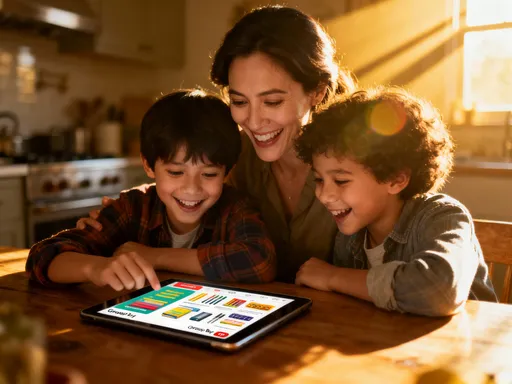
Instead of scrolling alone, we’d sit on the couch after dinner, my phone between us like a shared storybook. “Look, they added compostable bento boxes this week,” I’d say. “Do you want the one with the dinosaur or the one with the stars?” My son would ponder it like it was a life-altering decision (and honestly, at seven, it kind of was). We’d debate, laugh, sometimes even compromise. “Fine,” I’d say, “you can get the dinosaur one, but only if you promise not to cry when it gets lost in the cafeteria.”
The app became a bridge. It gave us something neutral and practical to talk about—but the conversation was never really about the lunchbox. It was about listening. It was about respecting each other’s preferences. It was about saying, “I see you, and your choice matters.” That’s not screen time. That’s shared time, dressed in digital clothing. And the more we did it, the more natural it felt. We weren’t using technology to escape each other. We were using it to find each other—in the middle of a grocery list.
Season by Season: How Our Habits Evolved Through the Year
What began as a back-to-school experiment grew into a year-round rhythm. Each season brought its own needs, its own lists, and its own opportunities to include the kids. In spring, the community organized a picnic prep buy: reusable plates, sunscreen in bulk, and wildflower seed packets for classroom gifts. I let my daughter lead that one. She made a chart, ranked her favorite flowers, and even created a little presentation for us at the kitchen table. “These are pollinator-friendly,” she announced, sounding like a tiny nature documentary host. I didn’t correct her pronunciation of “biodiversity.” I just smiled and said, “Sold. Let’s get ten packs.”
Summer brought camp supply kits—water bottles, name tags, and bug spray. This time, my son took charge. He cross-referenced the camp’s list with our inventory at home. “We already have two hats,” he declared. “We only need one more.” I nearly cried. Not because of the hat, but because he was thinking, planning, conserving. These weren’t just shopping decisions. They were life skills, growing quietly in the soil of everyday routines.
By fall, the classroom donation lists went live. Tissues, hand sanitizer, colored pencils. I used to dread these—another thing to remember, another trip to the store. But now, we treated it like a mission. “Operation Classroom Care Package,” we called it. The kids helped pack the bags, wrote little notes, and even decorated them with stickers. When I dropped them off, the teacher smiled. “The kids love seeing their parents involved.” I didn’t tell her the truth: it wasn’t just me. It was all of us. And in winter, the holiday cookie exchange group buy became our favorite. We ordered almond flour, organic sprinkles, and silicone baking mats. Baking together felt different when we’d chosen the ingredients as a team. The cookies tasted sweeter, somehow—not because of the sugar, but because of the shared intention behind them.
Beyond Savings: The Hidden Benefits We Didn’t Expect
Yes, we saved money. That’s undeniable. Group buys mean bulk discounts, fewer impulse trips to the store, and better deals on quality items. But the real savings weren’t just financial. They were emotional, relational, even developmental. My kids started noticing prices. “That’s expensive for just one eraser,” my daughter said recently, holding a single-pack at the drugstore. “We could get ten for less in the group buy.” I didn’t correct her. I high-fived her.
They also began to understand budgeting in a real, tangible way. When I explained that we had a limit on how many items we could order, they learned to prioritize. “Okay,” my son said, “if we get the fancy water bottle, we can’t get the extra snack pouches.” That kind of decision-making used to be mine alone. Now, it’s ours. And for me, the biggest win was the reduction in mental load. No more late-night list-making. No more last-minute panic. The group buy deadlines created natural structure. The shared lists meant I wasn’t starting from zero every season. And the community aspect? It surprised me. I started recognizing names—other parents who always added the organic option, the dad who always remembered the gluten-free snacks. My kids began spotting familiar faces at pickup points. “That’s Lily’s mom!” my daughter said the first time we met in person. “She voted for the same crayon color as me!”
These small, repeated interactions built something I didn’t expect: a sense of belonging. We weren’t just buying things. We were weaving threads of connection—with our kids, with our neighbors, with the rhythm of the year. And in a world that often feels fragmented, that’s priceless.
Making It Work Without the Overwhelm
Now, I won’t pretend it’s perfect. There was the time we forgot the shoe covers for the science lab. And the winter when I missed the deadline for the holiday cookie ingredients (we baked with regular flour and called it “rustic”). But here’s what I’ve learned: perfection isn’t the goal. Participation is. Connection is. And there are a few simple ways to keep it manageable.
First, set reminders. I put group buy deadlines in my calendar with alerts two weeks and two days ahead. That gives us time to discuss, decide, and adjust. Second, limit choices. Too many options lead to stress, not joy. I let the kids pick between two lunchbox styles, not ten. Third, use voice notes. On busy days, I’ll ask, “Hey, do you want the green or blue water bottle?” and they’ll shout their answer from the living room. I record it in a note. It’s not fancy, but it works.
I also turned selection into a weekend ritual. Every other Saturday, we do “Family Planning Time”—15 minutes with snacks and the app open. We call it our “mini family meeting.” Sometimes it’s serious. Sometimes it’s silly. But it’s always ours. And when we forget something? We laugh. We adapt. We remember that the goal isn’t flawless execution. It’s staying connected through the messiness of real life. Flexibility keeps it joyful. And joy, more than any perfectly packed backpack, is what I’m really after.
Why This Small Shift Feels Like a Big Win
When I look back at how we used to handle seasonal transitions—rushed, reactive, solo—I can’t believe how much has changed. What started as a way to save a few dollars on glue sticks has become a cornerstone of our family life. It’s not about the apps or the discounts. It’s about what we’ve built in the spaces between the transactions: patience, partnership, presence.
My kids are learning to make choices, to think ahead, to care about sustainability and community. I’m learning to slow down, to listen, to let go of control. And together, we’re discovering that technology doesn’t have to steal our attention—it can help us give it more intentionally. Every checklist, every shared decision, every “I picked this because you said you liked dinosaurs” moment adds up. They’re small threads, but woven together, they form something strong: a family that plans, chooses, and grows—together.
So if you’re feeling overwhelmed by the next season’s to-dos, I’ll offer this: don’t just plan the shopping. Plan the connection. Use the tools at your fingertips—not to do everything faster, but to do some things slower, together. Because the truth is, our kids won’t remember every pencil case we bought. But they’ll remember how it felt to choose one with us. And that? That’s the real return on investment.